
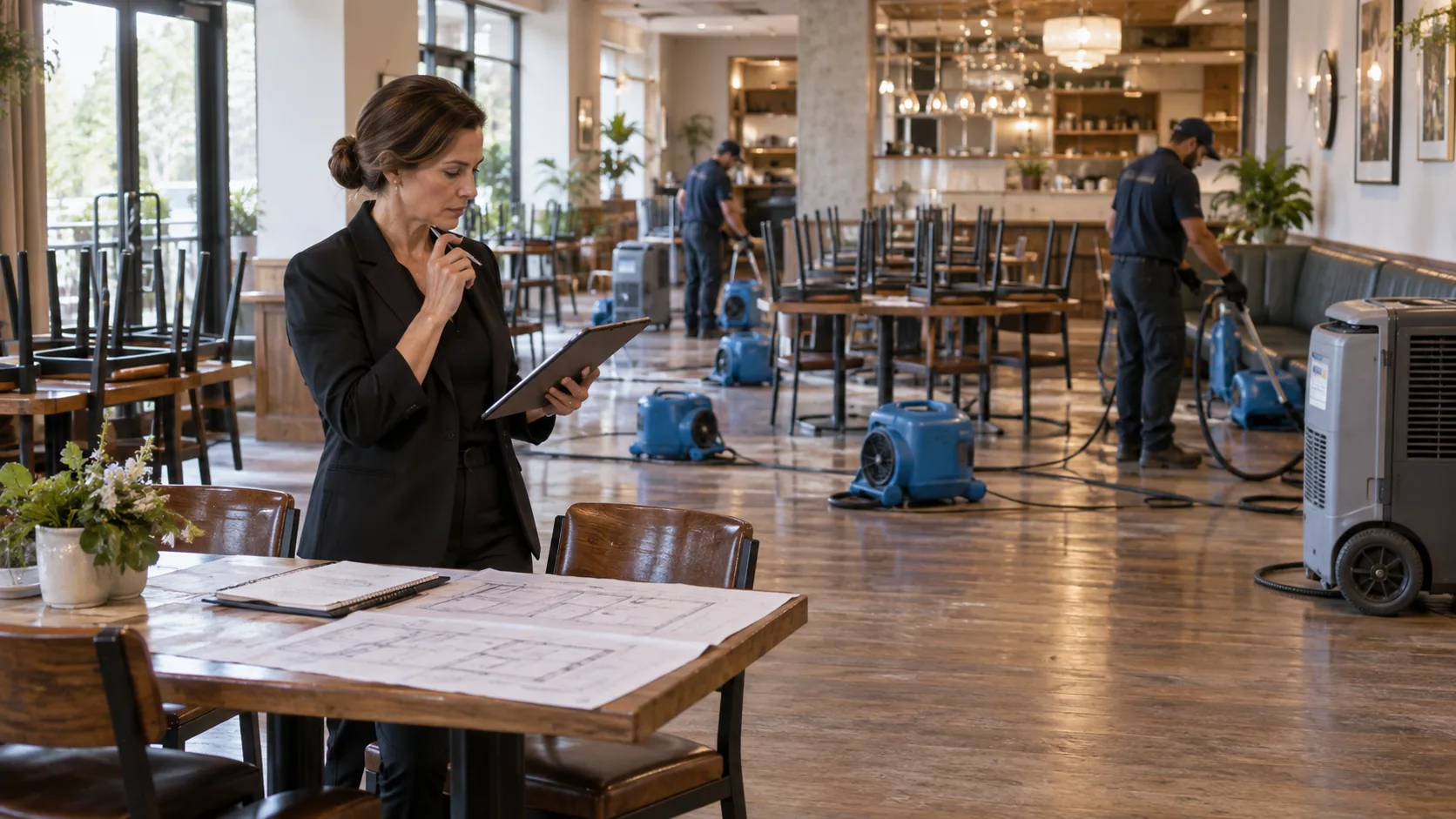
Know what starts the question
A fire, water event, property damage, or other disruption can suspend operations. The coverage conversation should start with the cause and affected property rather than the fact that revenue fell.
A temporary decline in trade or closure order does not by itself establish a covered business-income loss. Read the relevant trigger and endorsements.
Build a continuity worksheet before an event: normal sales, payroll, rent, debt, key suppliers, critical equipment, alternate preparation options, and the people who can authorize emergency spending. It supports business planning and makes financial documentation easier to locate later.
Business-income planning starts with operational dependencies. Identify the sales channels, core equipment, utilities, kitchen and dining capacity, key suppliers, landlord obligations, payroll commitments, and records needed to operate. This is useful whether or not a loss occurs because it shows which interruptions would require immediate decisions and which documents should be preserved in an accessible continuity folder.
Build a pre-event question set: Which sales and expenses are critical? What property or utility failure would interrupt them? Where are sales records, repair invoices, leases, and supplier contacts stored? Who can approve emergency spending? The answers strengthen continuity planning without assuming what a policy will pay.
Gather financial and operating records
Maintain profit-and-loss statements, sales reports, payroll, fixed expenses, lease obligations, inventory information, and records of extra costs incurred to reduce a suspension.
Keep property records and timelines as well: date of event, repairs, permits, equipment replacement, reopening decisions, and communications.
During a disruption, preserve the timeline rather than recreating it from memory. Save photographs, repair estimates, invoices, sales reports, communications, permit dates, supplier notices, and decisions about reopening or temporary operations.
After a property event, build a contemporaneous timeline. Record discovery, mitigation steps, communications, site access, inspections, estimates, repair authorization, equipment orders, permits, temporary operations, and reopening decisions. Pair the timeline with sales and expense records for the same period. It creates a factual record without assuming that a particular expense or lost revenue item is covered.
Compare time and dependency terms
Review waiting periods, restoration periods, limits, extra-expense provisions, deductibles, utility interruption, supplier or dependent-property terms, and exclusions.
Ask how the proposal defines the period of restoration and what property damage or covered cause is required. The answer belongs in the issued policy forms.
Read business-income and extra-expense wording as a connected set of terms. Ask about the cause of loss, waiting period, period of restoration, dependent property or utility wording, sublimits, and applicable endorsements. Keep the written policy response with the record.
When comparing business-income terms, ask how the policy describes the covered cause of loss, physical-loss requirement, waiting period, period of restoration, extra expense, dependent property, utility service, limits, exclusions, and endorsements. The purpose is to identify what the contract says and where further questions are needed. A closure, lost trade, or operating inconvenience does not itself establish coverage.
Create a recovery file
After an event or at renewal, retain the financial records and issued terms together. A disciplined file allows more focused questions when a material operational change occurs.
This guide does not determine claim payment. Policy wording, declarations, endorsements, facts, and applicable law control.
After reopening, compare actual costs and recovery steps with the records retained. Update the continuity file and property schedule so the next renewal discussion reflects what the restaurant learned from the disruption, without assuming a different future event would be treated the same way.
Recovery planning should include more than a repair budget. Decide who can authorize emergency spending, how payroll and vendor commitments will be tracked, which records are backed up, and how customers will be informed of a temporary change. After reopening, retain the recovery file and update property and continuity records so future planning reflects the actual operation.
A continuity and documentation worksheet
List the records the restaurant would need if operations were disrupted: daily sales, payroll, rent and loan obligations, vendor commitments, inventory, repair invoices, equipment records, lease contacts, permits, and bank or accounting contacts. Confirm who can access them if the premises cannot be used.
Create a disruption timeline template before an event. It should capture discovery, mitigation, inspections, communications, estimates, repair decisions, supplier issues, temporary operations, and reopening. The template supports good recordkeeping without predicting whether a policy covers any item.
When a policy is reviewed, use a separate question sheet for trigger, cause of loss, waiting period, restoration period, extra expense, utility or dependent-property wording, limits, exclusions, and endorsements. Refer every answer back to issued documents and preserve unresolved questions.
After an event or exercise, update the continuity plan with what was difficult to retrieve or approve. The most useful improvements are often practical: better record access, clear spending authority, current vendor contacts, and a current property schedule.
Build a recovery-time estimate before a loss
Identify the few things that would keep the restaurant closed: hood or suppression repairs, refrigeration replacement, utility restoration, health or fire inspection, supplier restart, and staff availability. Record normal daily sales by season, continuing rent and payroll, critical vendors, and any temporary kitchen or service option. This helps frame limits and extra-expense questions without treating a closure estimate as an insured amount.
The California Department of Insurance notes that business-interruption coverage commonly depends on policy wording and an underlying covered cause of loss. Ask what damage, waiting period, restoration period, utility or dependent-property endorsement, and proof of loss the form requires. A loss of customers or a voluntary closure alone does not establish the trigger.